Cattle Characteristics
Research
Highlighted below are some of the most significant studies carried out into cattle characteristics, behavior and welfare
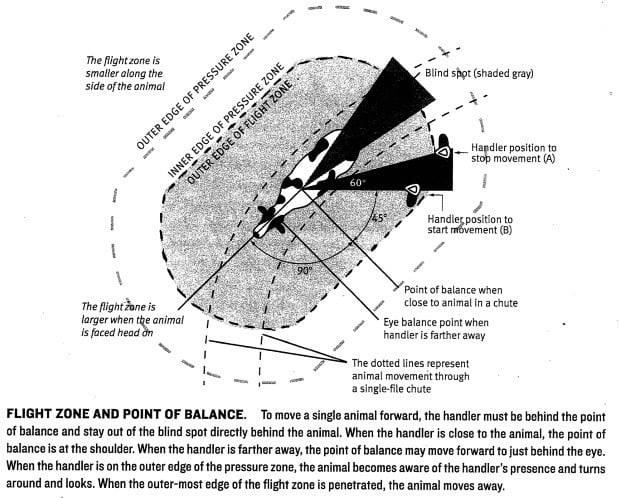
Cattle Flight Zone
Temple Grandin
Temple Grandin is probably the most influential researcher into cattle welfare. In particular she introduced the concept of the Cattle Flight Zone which has been fundamental in the shift to gentle handling. https://www.grandin.com/behaviour/principles/flight.zone.html
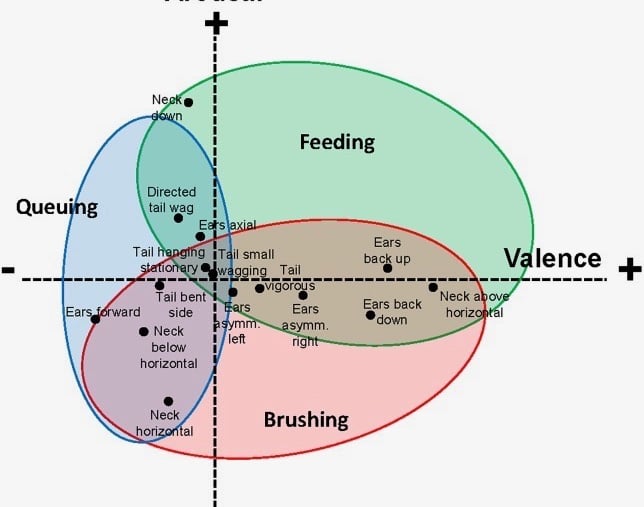
Reading Cattle Emotions
de Oliveira & Keeling
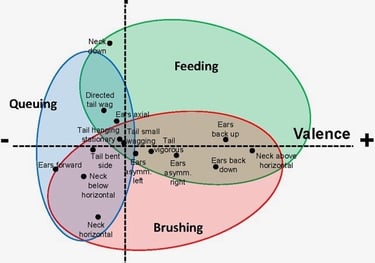
Research into the emotional lives of cows is still relatively small. One challenge is how to recognize what cows are feeling. Oliveira and Keeling have done key research into understanding cows emotions from their body language.


Cow Psychology
Mariono & Allen
Marion & Allen conducted an extensive review of research into cattle psychology. They highlighted the fact that cows have much more sophisticated intelligence and emotional lives had commonly believed. In particular they emphasize that cows
can tell the difference between people, other cows and objects
retain a negative reaction to objects associated with negative experiences
enjoy learning
have distinct personalities
can learn from each other
https://www.animalbehaviorandcognition.org/uploads/journals/17/AB&C_2017_Vol4(4)_Marino_Allen.pdf
Cows suffer when regrouped
Muroma et al (2024)
This study showed that regrouping has an impact on the social environment/dynamics and well-being which in return influenced milk production, more especially in the primiparous cows.
https://www.sciencedirect.com/science/article/pii/S1751731124000259
Cows form long-term bonds
Gutman et al (2015)
Long-term familiarity had a stronger effect on the intensity of social relationships, i.e. regarding investment of time and energy, than very recent shared experience. These results support the notion that dairy cows actively maintain valuable dyadic relationships. In practical terms, keeping well-acquainted cows together may contribute to a stable inner structure of a dairy herd and thus promote dairy cow welfare.
Cows learn from each other
Costa et al (2016)
This study found that young heifers did better at grazing when grouped with more experienced cows. Providing heifers with pasture-experienced social companions when first introduced to pasture promotes a more rapid onset of grazing. The presence of habituated older experienced companions may improve the ability of heifers to adapt to pasture.