Benefits to Humans
Research
Highlighted below are some of the most significant studies carried out into the impact spending time with cows has on people.
Cows as therapists
Malon (1994)
One of the earliest studies into the mental health benefits of interacting with cows. The study investigates the experiences of children who are placed in a residential treatment center that utilizes farm animals as one of its treatment approaches. The findings indicate that the children utilized the farm animals, like one would utilize the services of a therapist. Respondents indicated that they spoke to the animals, without fear that what they said would be repeated; that they visited the animals to feel better when they felt sad or angry; and that they learned about nurturing and caring for other living things.
Cow hugging
Sharma (2021)
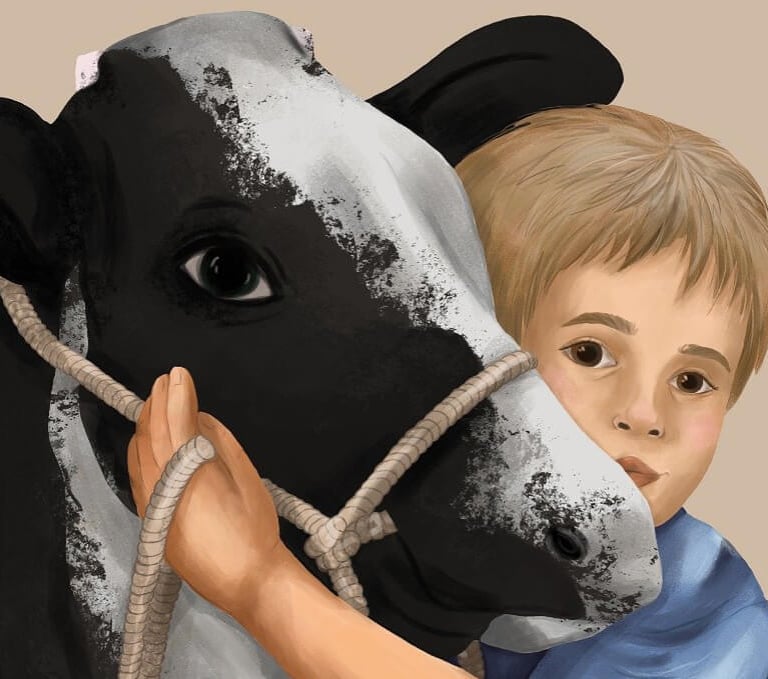
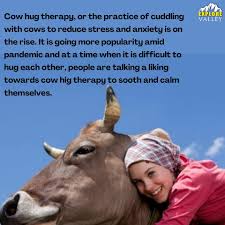
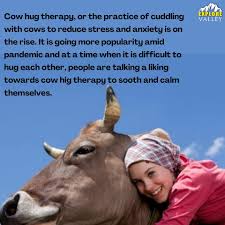
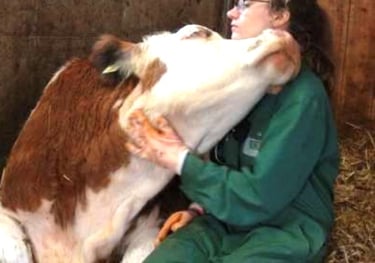
Sharm found that the company of cow was enjoyed by participants and experienced as comforting, combating feelings of loneliness, stress and anxiety. Furthermore, sessions encouraged social interaction and working in teams to care for cow fostered a sense of belonging and helped participants develop self-confidence. Furthermore, the participants explained how a sense of achievement, fun and enjoyment was experienced while interacting with cow and working in farms. Lastly all participants felt passionate about cow and their welfare and stated that this was the great session or therapy to reduce anxiety and stress.
https://ijip.in/wp-content/uploads/2021/02/18.01.011.20210901.pdf
Mutual benefits of Cow Assisted Therapy
Compitus & Bierbower (2024)
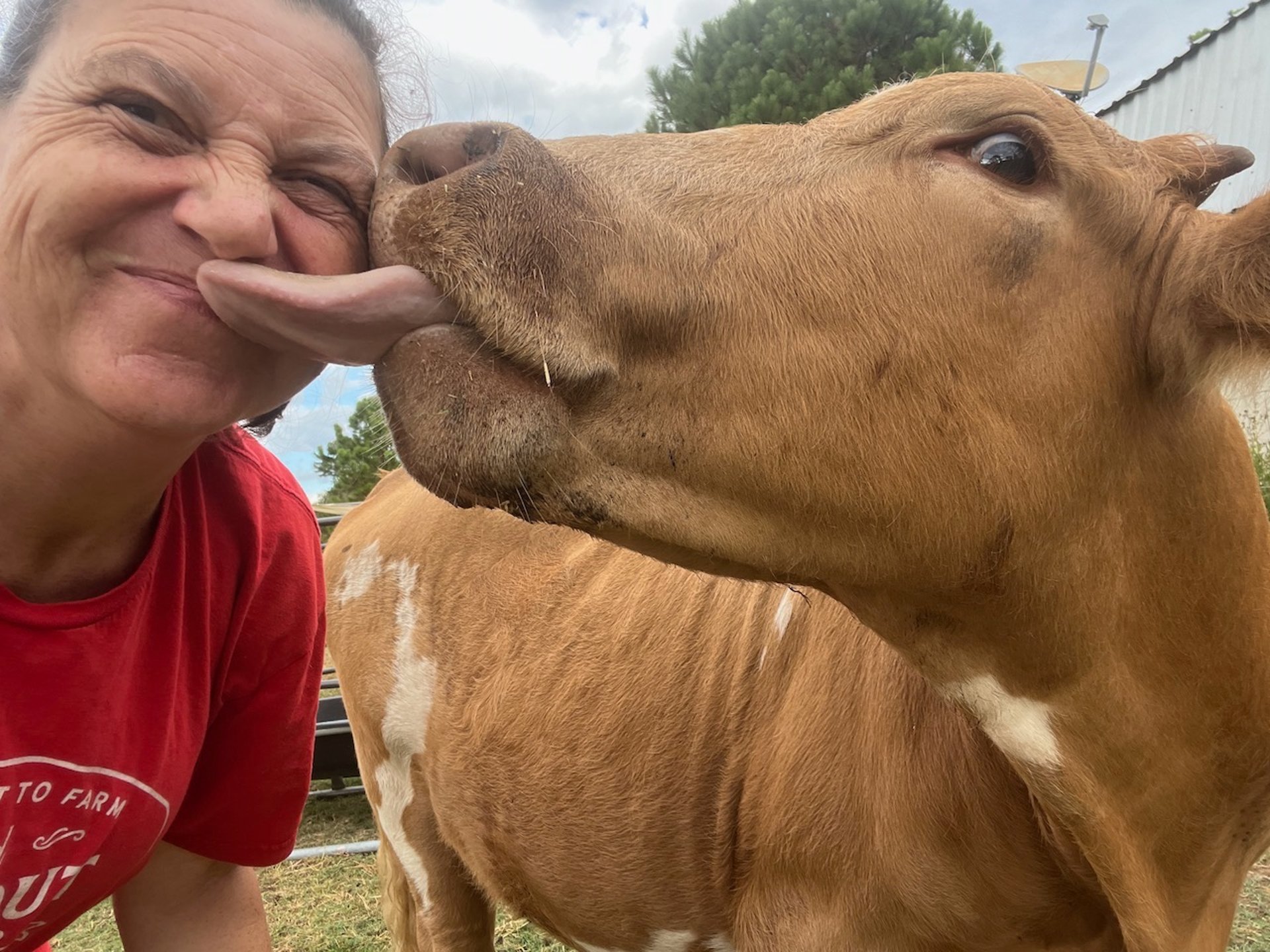
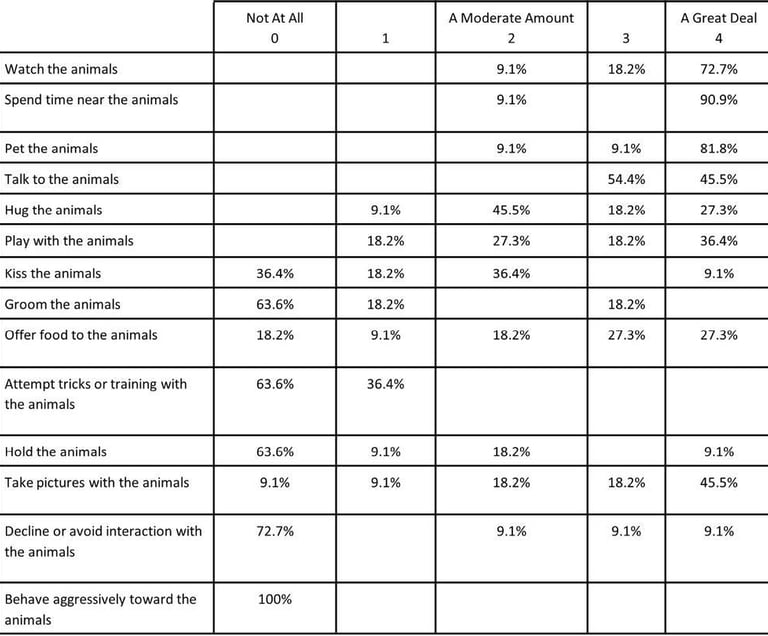
Compitus & Beibower found that bovine-assisted therapy may not only benefit human participants but appears to be enriching to the cattle participants, as shown by their proximity to and continuous interactions with humans. They assessed the cow human interactions using the Human-Animal Interaction Scale (HAIS). HAIS measures human-animal interactions through a number rated 24-item self-report. Most subjects reported that that the cattle licked them, smelled them, took food from them, and allowed physical human-initiated interactions in the form of hugs, grooming, petting, or kisses.
https://www.cabidigitallibrary.org/doi/full/10.1079/hai.2024.0016
The HAIS Participant Form
Cows prefer direct contact with humans
Lange et al
Lange et al found that cows are actually more relaxed when spoken to directly by a live human rather than a recording becoming more relaxed.
Cows will seek out positive treatment by humans
Bertenshaw & Rowlinson
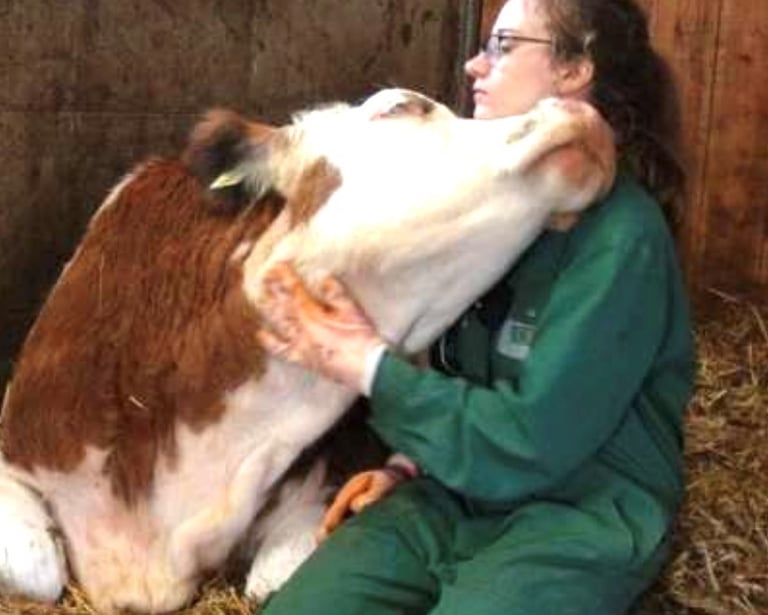
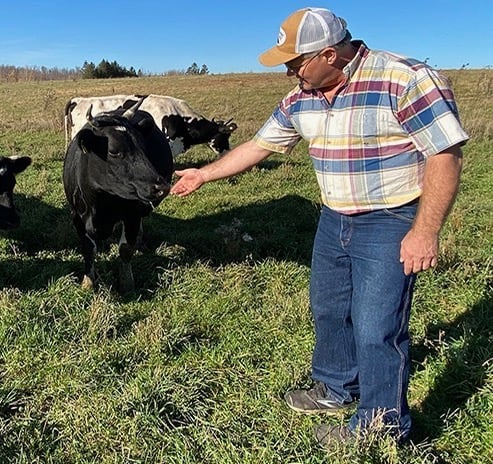
Bertenshaw and Rowlinson found that even 5 minutes a week of positive human attention can make a big difference. Cows became less fearful and more likely to seek further human interaction
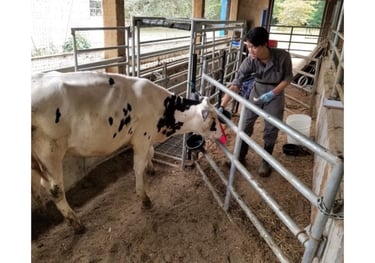
Cows can be trained using positive reinforcement.
Heinsius, J.L. et al
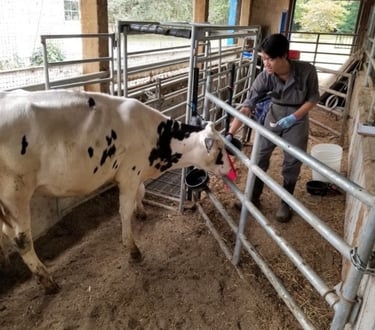
Training heifers using PRT increased anticipatory and play behavior during a waiting period before gaining access to a training session. These results suggest that PRT training can improve emotional states during what might otherwise be aversive events on farm.
https://www.journalofdairyscience.org/article/S0022-0302(23)00664-1/fulltext